 Connect with a Marketing Expert

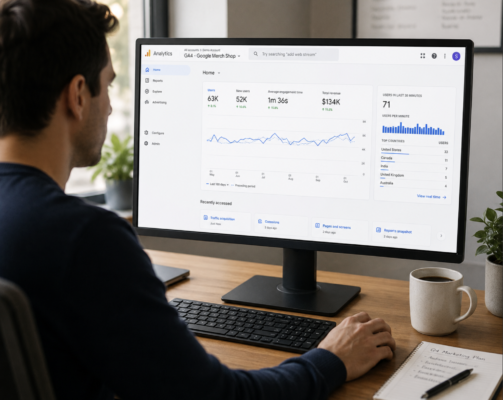
If you're a marketing manager at a home service company, you've probably spent the last few years focused on understanding where your leads come from. Whether you're tracking calls, form fills, booked jobs, or revenue, visibility into marketing performance has never been more important.
Now there's a new source of traffic and leads that deserves your attention: AI.
The good news is that Google just made it much easier to see how much website traffic is coming from AI platforms like ChatGPT, Gemini, Claude, Perplexity, Copilot, and others.
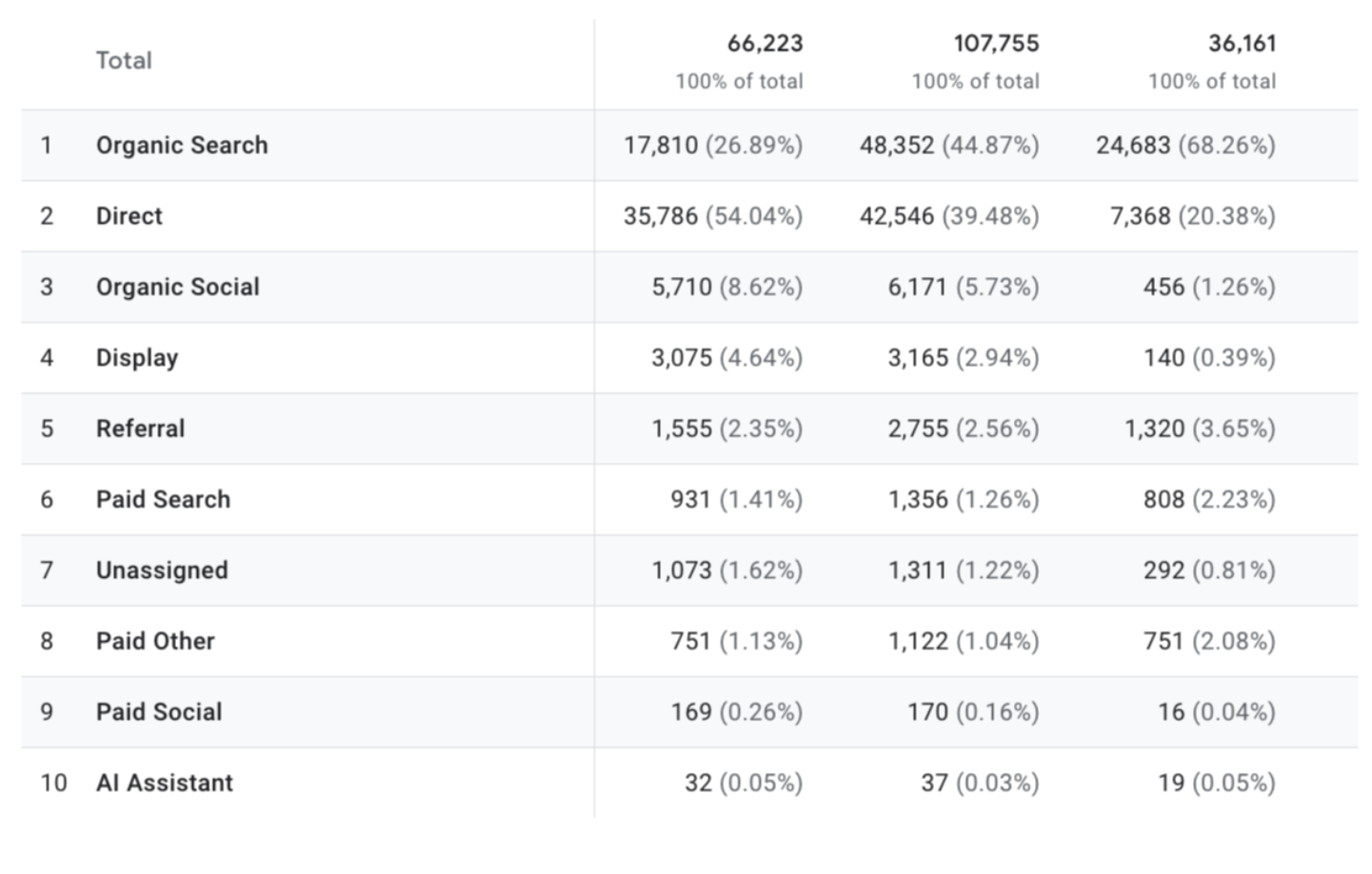
Google Analytics 4 now includes a dedicated "AI Assistant" channel that automatically groups traffic from major AI platforms into its own reporting category. There is no special setup required. No complicated workarounds. The data simply begins appearing within your standard Google Analytics reports.
While this may sound like a small reporting update, it has the potential to change how marketing teams in the home service industry evaluate visibility and lead generation in the years ahead.
Why This Matters for Home Service Marketing
Homeowners are changing the way they search for contractors.
In the past, most people would go directly to Google and search for phrases like "HVAC company near me," "best plumber in town," or "electrician near me." Today, more homeowners are asking AI platforms those same questions.
A homeowner might ask ChatGPT for recommendations on the best HVAC company in their area. Another may use Gemini to compare plumbing companies before requesting service. Others may use Perplexity or Copilot to research local contractors, reviews, pricing, and services before visiting a website.
For home service businesses, this creates an entirely new source of website traffic and potential leads.
The challenge has been measuring it.
The Reporting Problem Marketing Managers Faced
Until recently, Google Analytics didn't provide a clean way to identify AI-driven traffic.
When someone clicked through from an AI platform, Google Analytics often categorized that visit as a referral or, in many cases, direct traffic. As a result, marketing managers had no easy way to understand how much website traffic AI platforms were generating.
Many agencies and internal marketing teams built custom reporting solutions to solve this problem. These setups relied on advanced tracking rules, custom channel groupings, UTM parameters, and ongoing maintenance.
While those solutions worked, they also created several challenges.
They required technical expertise, ongoing management, and regular updates whenever AI platforms changed how they passed traffic information. They also consumed valuable customization options within Google Analytics that many companies wanted to reserve for other reporting needs.
In short, accurately measuring AI traffic often requires significant effort and technical knowledge.
What Google Changed
Google recently introduced a native "AI Assistant" channel inside Google Analytics 4.
Now, when a homeowner visits your website from a recognized AI platform, Google automatically categorizes that visit under the AI Assistant channel. The traffic appears alongside other familiar channels such as Organic Search, Paid Search, Direct, Referral, and Social.
The biggest advantage is simplicity.
Marketing managers no longer need to build custom reporting structures just to understand whether AI platforms are sending visitors to their website. The data is now available directly within the reports they already use every day.
This change makes AI traffic far more visible and easier to monitor over time.
Instead of treating AI as a hidden source of traffic buried inside other channels, it now becomes a measurable marketing opportunity.
How Marketing Managers Can View AI Traffic
Finding this information is relatively simple.
Within Google Analytics 4, navigate to the Traffic Acquisition report and review the Session Default Channel Group dimension. If your website is receiving traffic from supported AI platforms, you should see an AI Assistant category listed among your traffic sources.
This allows marketing teams to begin measuring:
- Website sessions from AI platforms
- User engagement from AI visitors
- Conversion activity
- Lead generation performance
- Trends over time
Most importantly, it provides a starting point for understanding whether homeowners are discovering your company through AI-driven searches and recommendations.
AI Traffic Is Only Part of the Story
While this new reporting capability is valuable, marketing managers should understand its limitations.
Not every AI-generated visit can be identified perfectly. Some AI platforms pass detailed referral information while others do not. In some cases, visits may still appear as direct traffic rather than being categorized as AI Assistant traffic.
Because of this, the AI Assistant channel should be viewed as a strong indicator rather than a complete picture.
The traffic you see in this channel represents confirmed AI-generated visits. The actual influence of AI on your lead generation efforts may be even larger.
This is one reason why many sophisticated marketing teams continue monitoring multiple data sources when evaluating performance.
What Home Service Companies Should Do Next
The introduction of AI traffic reporting is another reminder that homeowner search behavior is evolving.
For years, home service companies focused almost entirely on showing up in Google search results. While Google remains incredibly important, homeowners now have additional ways to discover contractors.
This means marketing teams should think beyond traditional search engine optimization.
Contractors should focus on building a strong online presence across multiple channels, including:
- Search engines
- Google Business Profile
- Online reviews
- Social media
- Video content
- Industry directories
- Local citations
- AI platforms
The companies that invest in building a trusted brand across all of these channels are often the same companies that AI tools are more likely to reference and recommend.
The Future of Search Is Expanding
For marketing managers in the home service industry, this update represents more than a new reporting feature. It provides visibility into a growing source of homeowner traffic that many companies have not been measuring effectively.
The ability to track AI-driven website visitors gives marketing teams a better understanding of how customers are finding their business and how search behavior continues to evolve.
At Superpath, we believe homeowners are no longer searching in just one place. They are searching everywhere. That includes Google, Bing, YouTube, social media platforms, online reviews, local directories, and increasingly, AI assistants.
The contractors who understand this shift and begin measuring AI traffic today will be better positioned to improve visibility, generate more qualified leads, and stay ahead of competitors as AI becomes an increasingly important part of the customer journey.